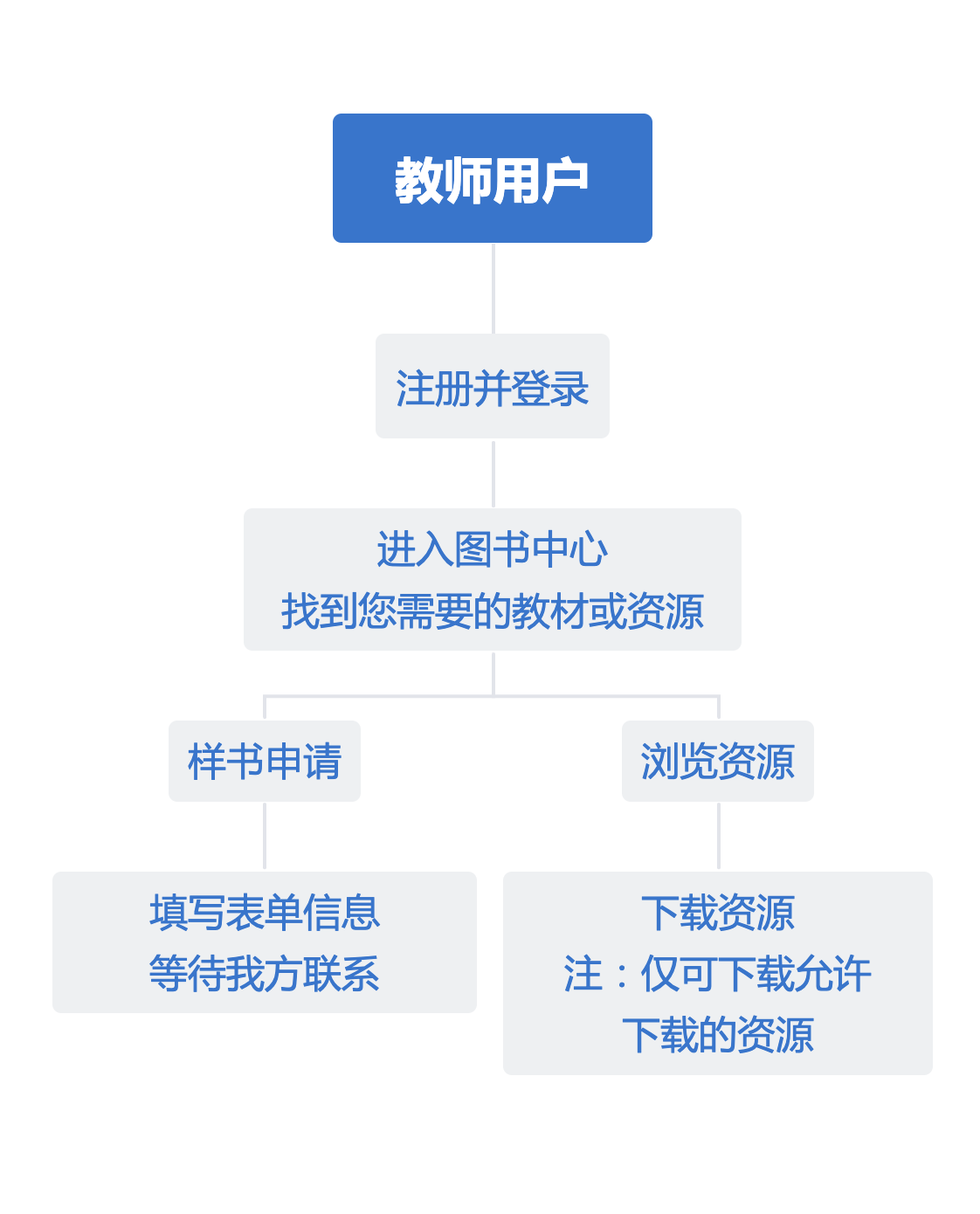
教师服务直通车
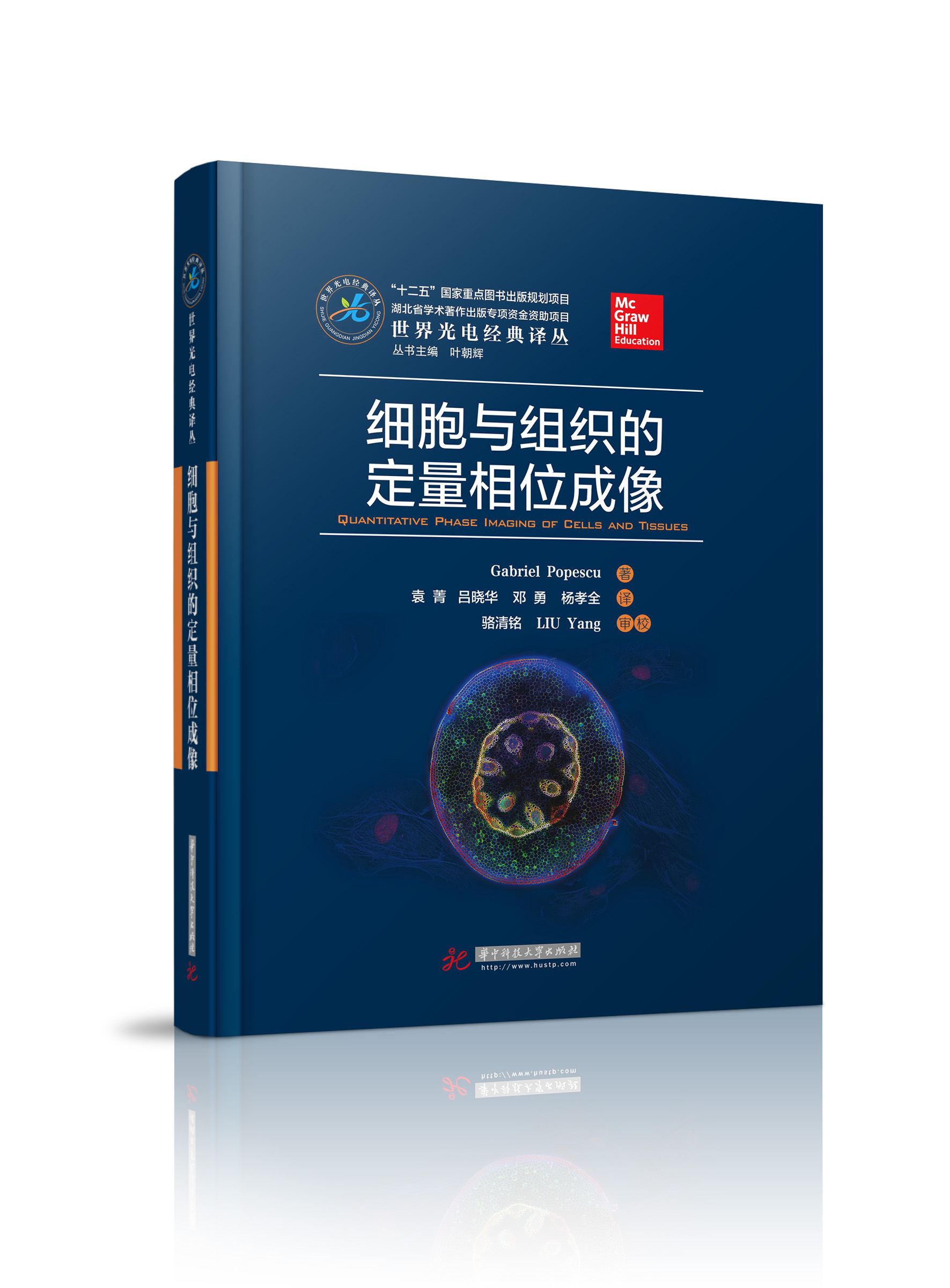
  • 细胞与组织的定量相位成像
  • 作者:(美) 波佩斯库Gabriel Popescu
  • 策划编辑:徐晓琦
  • ISBN:978-7-5680-2914-8
  • 图书开本:16开
  • 出版日期:2017-11-27
  • 定价:0.00元去购买
  • 所属丛书:世界光电经典译丛
图书简介

本书提供了QPI的全面综述,涵盖了从相位显微镜的理论基础、到不同技术创新以实现在最小外部及空间噪声影响下以视频速率精确地提取定量相位信息,到诸如监测细胞生长、研究细胞动力学以及癌症组织诊断等不同生物医学的前沿应用。这本书利用相位显微镜为主线,有效地将光学显微镜成像机制、全息成像、相干成像、生物物理学与组织光学等联系起来。不论是对刚刚入门的光学或电子工程,生物医学工程以及生物物理等专业的学生,还是想紧跟前沿研究或扩宽研究领域的高级读者而言,这本书都将是研究定量相位成像的有益参考。

作者介绍

Gabriel Popescu is an Associate Professor in Electrical and Computer Engineering, University of Illinois at Urbana-Champaign. He authored a book, edited another book, 100 journal publications, 120 conference presentations, 24 patents and gave 100 invited talks. Professor Popescu directs the Quantitative Light Imaging Laboratory (QLI Lab) at the Beckman Institute for Advanced Science and Technology. He received the B.S. and M.S. in Physics from University of Bucharest, in 1995 and 1996, respectively. He obtained his M.S. in Optics in 1999 and the Ph.D. in Optics in 2002 from the School of Optics/ CREOL (now the College of Optics and Photonics), University of Central Florida. Dr. Popescu continued his training with the G. R. Harrison Spectroscopy Laboratory at M.I.T., working as a postdoctoral associate. He joined University of Illinois at Urbana-Champaign in August 2007. Prof. Popescu received the 2009 NSF CAREER Award, was the 2012 Innovation Discovery Finalist selected by the Office of Technology Management Office, UIUC, and was elected as the 2012-2013 Fellow of the Center for Advanced Studies at UIUC. Dr. Popescu is an Associate Editor of Optics Express and Biomedical Optics Express, and Editorial Board Member for Journal of Biomedical Optics. He is an SPIE Fellow and an OSA Senior Member. Over the past decade, Dr. Popescu has been working mainly on quantitative phase imaging of cells and tissues, a very exciting emerging research field on which he published a book in 2011. Dr. Popescu founded Phi Optics, Inc., a start-up company that commercializes quantitative phase imaging technology.

书籍目录

目录

第1章绪论/1

1.1光学显微成像术/1

1.2定量相位成像/2

1.3QPI和多模式研究/3

1.4纳米尺度和三维成像/5

第2章基本原理/10

2.1自由空间中的光传播/10

2.2波传播的菲涅尔近似/15

2.3自由空间的傅里叶变换性质/16

2.4透镜组的傅里叶变换性质/18

2.5非均匀介质中光散射的(一阶)玻恩近似/23

2.6单粒子的散射/28

2.7玻恩近似下的粒子/29

2.8玻恩近似下粒子群的散射/33

2.9米氏散射/35

第3章时间与空间场的相关性/37

3.1时空相关函数:相干体积/37

3.2单色光源的空间相关性/40

3.3平面波的时间相关性/46

细胞与组织的定量相位成像

目录

第4章图像特征/51

4.1作为线性运算的成像/51

4.2分辨率/52

4.3信噪比/53

4.4对比度和对比度噪声比/55

第5章光学显微镜/61

5.1阿贝成像理论/61

5.2相位型物体成像/67

5.3泽尔尼克相衬显微成像术/69

第6章全息术/75

6.1Gabor(同轴)全息术/75

6.2Leith和Upatnieks(离轴)全息术/77

6.3非线性(实时)全息术或相位共轭/80

6.4数字全息术/81

第7章点扫描QPI/87

7.1弱相干干涉测量法/87

7.2色散效应/91

7.3时域光学相干层析成像/94

7.4傅里叶域及扫频OCT/98

7.5定性的相敏方法/101

7.6定 量 方 法/105

7.7进一步发展/110

第8章全场定量相位成像的原理/121

8.1干涉成像/121

8.2时域相位调制:相移干涉测量/122

8.3空间相位调制:离轴干涉测量/124

8.4相位解缠/125

8.5QPI的性能指标/127

8.6QPI方法和性能指标的总结/135

第9章离轴法/139

9.1数字全息显微成像术/139

9.2希尔伯特相位显微成像术/148

第10章相移方法/171

10.1自动相移数字记录干涉显微镜(DRIMAPS)/171

10.2光正交显微成像术/176

第11章共光路方法/189

11.1傅里叶相位显微成像术/189

11.2衍射相位显微成像术/201

第12章白光法/230

12.1基于强度传输方程的QPI方法/230

12.2空间光干涉显微成像术/235

第13章傅里叶变换光散射/255

13.1原理/255

13.2进一步的发展/261

13.3生物应用/263

第14章方法的目前趋势/283

14.1QPI层析成像/283

14.2光谱QPI/289

第15章当前应用趋势/300

15.1细胞动力学/300

15.2细胞生长/311

15.3组织光学/314

15.4临床应用/320

附录A复解析信号/341

附录B二维与三维傅里叶变换/345

附录CQPI作品/356

分享